
My kind of place
What is it about big social media that makes me feel like I’m part of the conversation? Conversations are being had, and there are people here, so this must be the place..?
Maybe we need a new name for it. There’s just not much social about TikTok, Instagram, or YouTube. It’s TV in your pocket with infinite channels. In 2005 if you wanted conversation, you’d watch a talk show or The View. Now the channels have a much finer grain, but it’s the same thing. And at times I’ve been glued to it.
If you remember old YouTube much, you might remember the video response section (phased out in 2013). It wasn’t used a lot, but the intention was good. For some video, you could make a response and it would appear underneath the video. You as a viewer could start a conversation with the creator. I thought about it recently because it feels alien now. Remixes and stitches are something like it but not quite right.
Conversation doesn’t scale well. After some tipping point the signal gets drowned out in the noise, the thoughts from interested strangers turn into regular negative comments. Funny scales well, drama scales well, but not so much people.
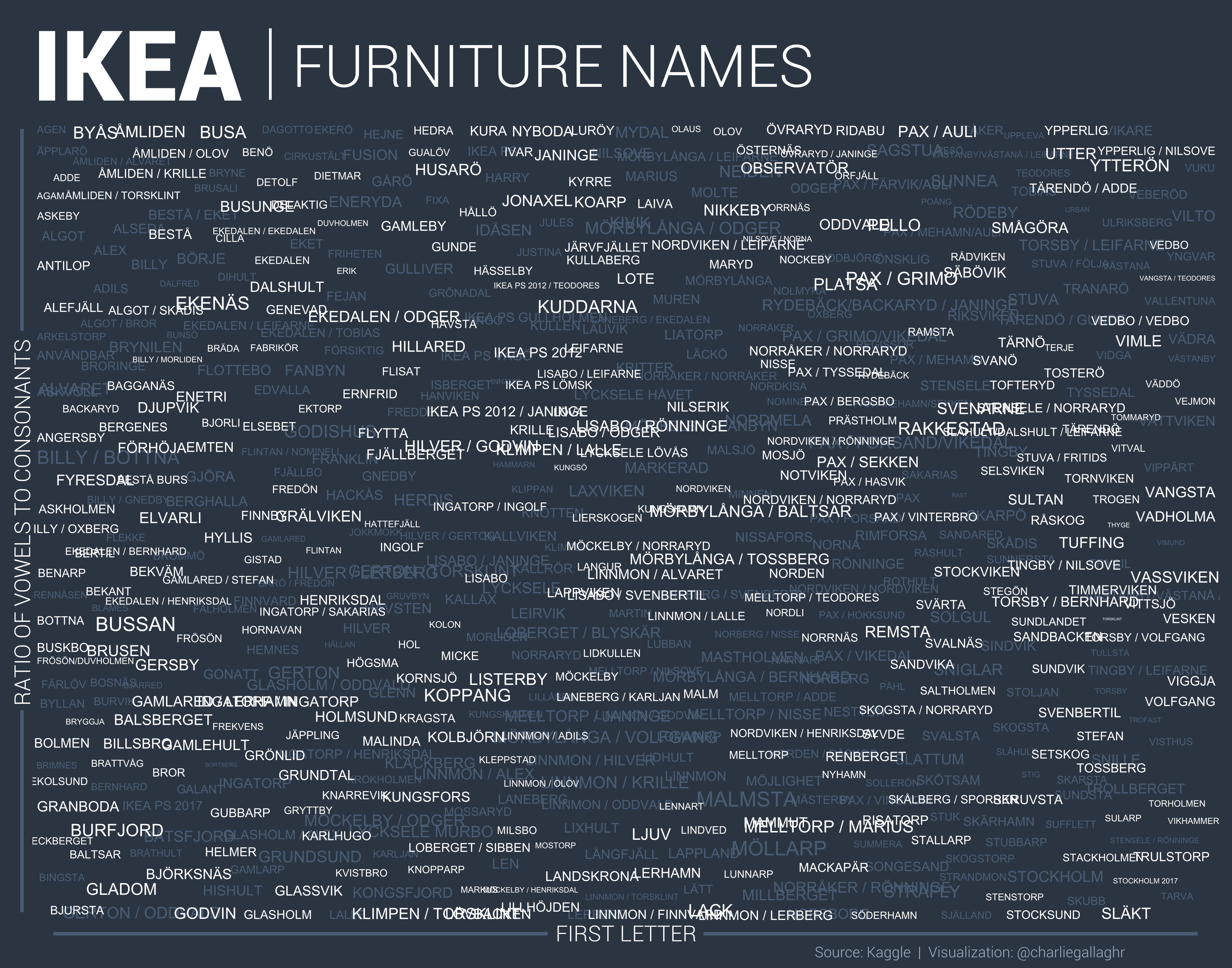
For a while I was a part of a small community of data visualization enthusiasts called #TidyTuesday. Every week our benevolent leader would publish a dataset, and we would make a visualization with it. You can see my visualizations on my GitHub, but as a small example:
It was the most fun I’ve had on the internet. The anticipation, the first visualizations, the ones that blew me away. For 41 weeks, I got the assignment, worked on something I thought would be cool, and then watched the other visualizations flow in. It was small, and mutually encouraging. We all gave credit when we stole from each other.
But I don’t think it works if there are 10,000 contributors instead of 100.
I’ve been thinking about that internet and the internet I’ve tended to be on lately. There are sites that focus on creators, and there are sites that focus on people. Instagram, YouTube, and TikTok are platforms for creators.1 Reddit, Twitter, Meetup, personal websites, and (I mean this without irony, mostly) Facebook groups2 are for people. LinkedIn is technically about people, but it’s driven by self-advertising, so I don’t know where it belongs.
I didn’t distinguish between these as much before. I knew I liked twitter better than instagram, but I thought it was my fault that I didn’t find a community on the ‘sta.
It’s market forces for the creators. You can’t monetize a subreddit3, but you can monetize a YouTube channel. RSS feeds can’t be monetized, and so the tech was nearly killed. But it’s still widely available. And as old as Reddit is, it’s still popular. It’s a people site.4
I’ve fallen into the tech blogosphere lately, thanks to this post from ClickHouse and especially thanks to Thorsten Ball’s weekly “Joy & Curiosity” on Register Spill. This part of the blogosphere is mostly passion projects on simple HTML websites (please excuse the appearance of my own site, I haven’t had time to make it plain), and the people are interested in their fields. I have an RSS reader and I add new sites when I find them. Some post every day (jwz), others every week (Thorsten), and some might never post again.
And you know the nice thing? When I open it up, it’s my feed, and there are no suggestions. I read it every morning with breakfast, and on Sundays I read the long-form articles I’ve saved up from the week.
-
Marcel the Shell said it best: “It’s still a group of people, but it’s an audience, it’s not a community.” And dammit if that’s not the whole thing. ↩
-
Say what you will about Facebook (and I’d agree), but Facebook groups are unique for being about geographically spread out people with niche interests who are encouraged to get together in real life occasionally. cf. Meetup and Reddit. ↩
-
You can earn money through Reddit by being what they consider to be a high quality contributor. The money’s not the same as channel-focused sites, though. ↩
-
I recently learned that three of my favorite things about the Internet (RSS, Reddit, at least in principle, and the creative commons license) were all developed in part by Aaron Swartz. He had the right idea for the Internet. ↩